Notify yourself Link to this section
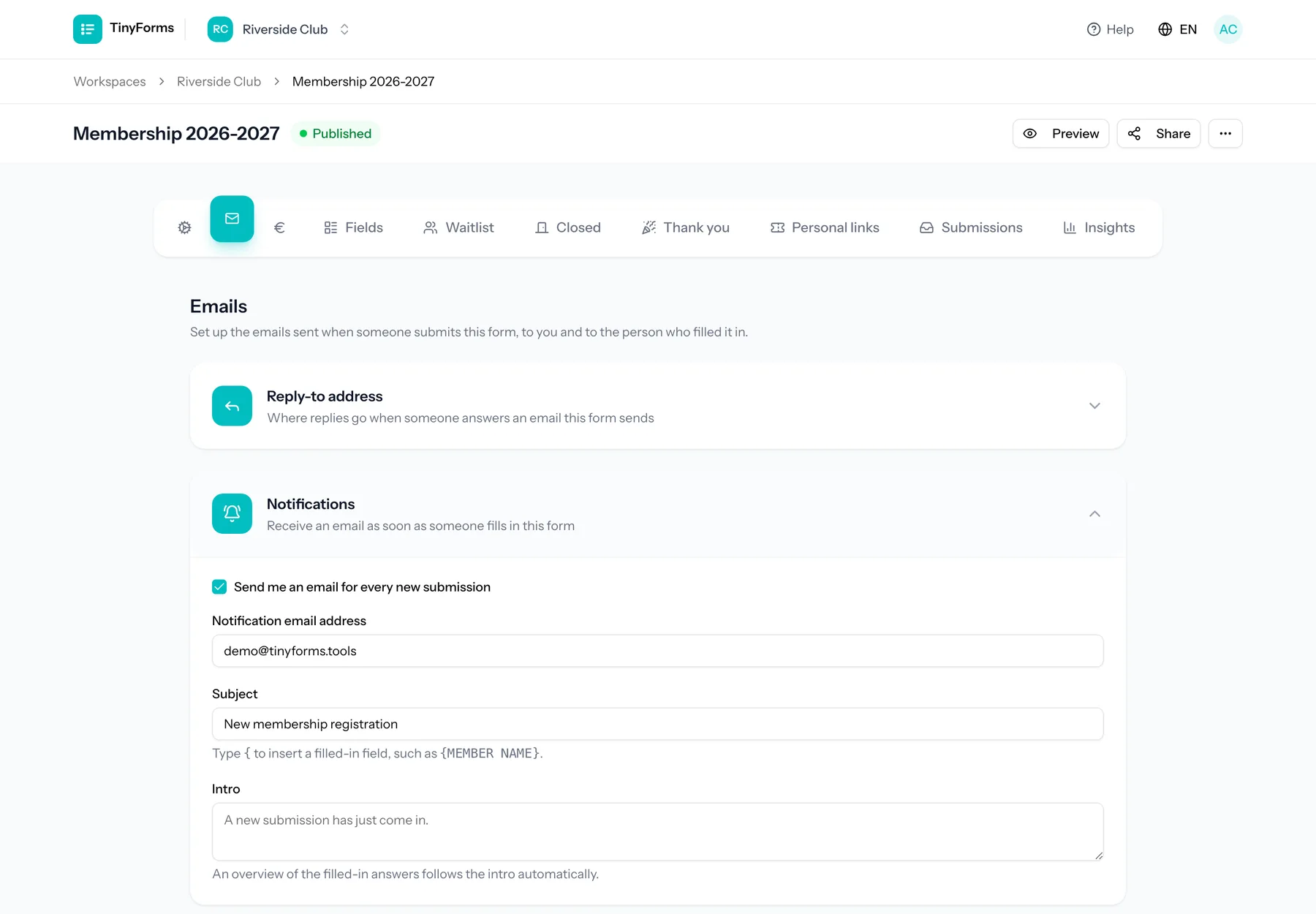
Get an email every time someone submits your form. You choose the recipient, the subject and an optional intro paragraph, so the notification reads the way you want.
Confirm to respondents Link to this section
Send a confirmation email to the person who filled in the form. TinyForms can auto-detect the email field, or you can choose it, and you set the subject and intro.
So that nobody can use a form to send mail to strangers, one address receives at most five confirmations per form per hour. Every answer is still stored and you are still notified; only the extra confirmation is left out. Keep that in mind when you test a form a few times with your own address.
Placeholders and sender Link to this section
Subjects and intros can include placeholders that get filled in with the respondent answers, so each email is personalised. An answer that arrived through a personal link fills in what that link carried as well: {RECIPIENT} and every hidden column under its own name.
Emails are sent from a per-workspace address based on your workspace slug, and replies go to the reply-to address set on the form or workspace. Emails are queued and rendered in the language of the form.
When a form turns someone away Link to this section
A published form can refuse an answer: your monthly submission allowance is used up, your storage is full, or your plan no longer covers a payment or a file upload the form still asks for. The visitor is told why, on the form itself, and nothing is stored.
Because nothing is stored, you would not see this happen at all. So the workspace owner gets an email naming the form and the cause, at most once a day per form for as long as the cause is there. Lift the cause (upgrade the plan, free up storage, or take the question off the form) and the mails stop.
An email question refuses an address without a domain suffix, such as "someone@company", while the visitor can still correct it. A confirmation to an address like that is refused by the mail provider, and the respondent would never learn their answer went nowhere.